


Molecular, Anatomical, and Sensory Ecology of Primates and Other Mammals


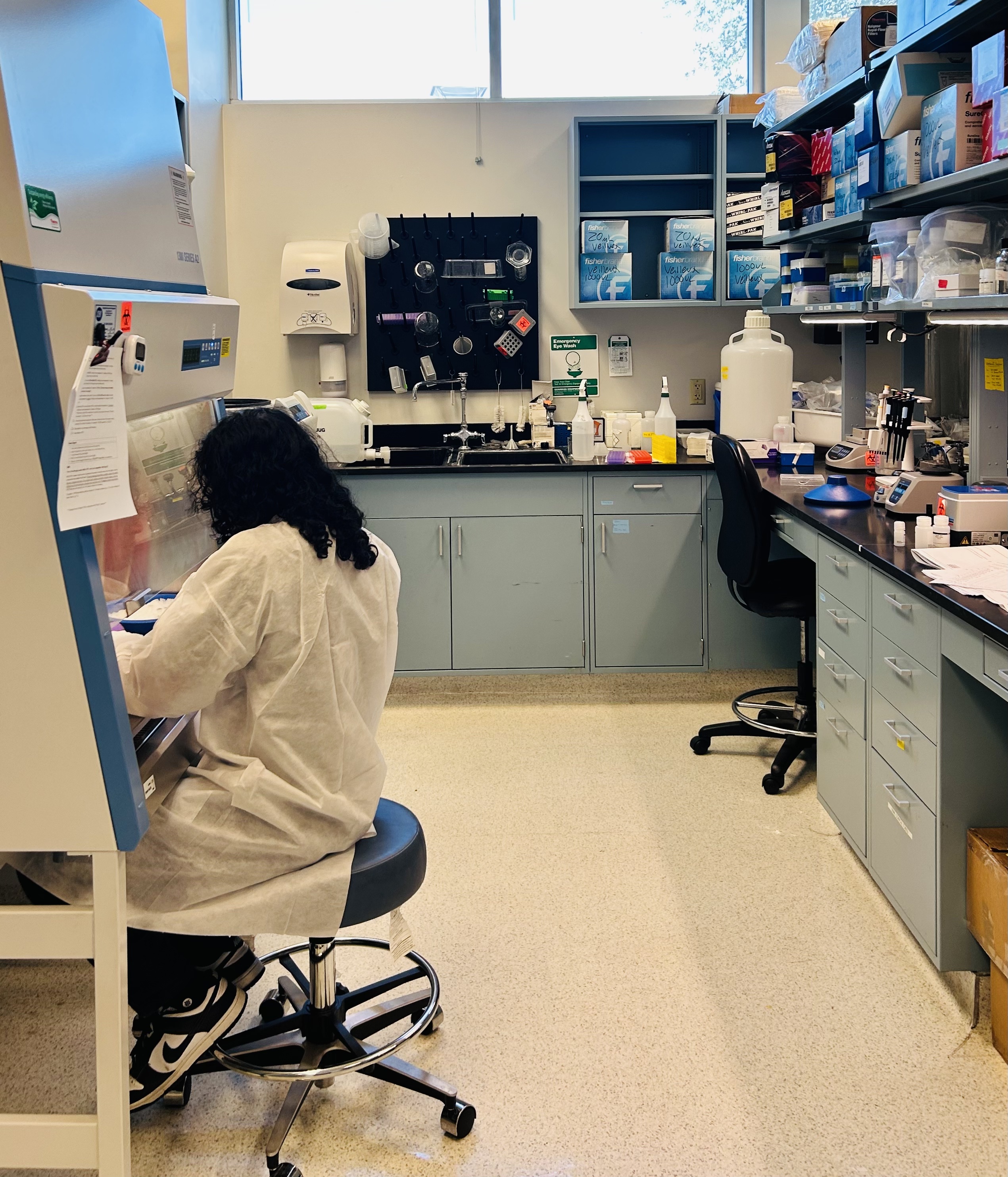

I am a biological anthropologist and Associate Professor of Anatomy at Midwestern University in Glendale, Arizona. In my research, I use a combination of molecular genomic, behavioral ecology, psychophysics, and anatomical methods to investigate interspecific and intraspecific variation in mammal sensory systems, with a particular focus on primates. In my teaching, I teach Human Anatomy to health professional students.
Research Focus
My research focuses on senses because they can offer a window for exploring biological adaptation and evolution. Senses are how we interact with the external world — we use senses to find food, evaluate food quality, detect predators, and move about our environments. Consequently, sensory function is often tightly linked to an animal's ecology. Variation in sensory genes, sensory anatomy, or sensory function can represent adaptations to different ecological conditions.
By better understanding patterns of interspecific and intraspecific variation in sensory systems, I can explore broader questions surrounding the evolution of primate (including human!) and mammal sensory systems:
How have ecological factors — such as diet, foraging strategy, habitat type, or activity pattern — shaped interspecific differences in sensory systems?
I study the sensory ecology of vision (visual acuity and color discrimination), touch, and taste across a variety of taxa, including many primates, humans, and non-primate mammals.
What factors influence the evolution of intraspecific variation in sensory systems, both within and between populations?
In many species, individuals vary in their sensory function, such as in color discrimination (polymorphic trichromacy) or taste discrimination (e.g., PTC sensitivity). I am interested in exploring factors leading to the maintenance of this variation when it is found within populations, such as my work on trichromacy in sifaka. I am also interested in local adaptations of the sensory system — variation between populations of the same species due to adaptation to local environmental conditions, such as human variation associated with subsistence strategy.
How have primate and human sensory systems adapted to changing environments throughout evolution?
Major environmental shifts, such as in foraging strategy and habitat usage, are hypothesized to have played important roles during primate and human evolution. During hominin evolution, for example, there was a shift to more open environments and an increased emphasis on complex tool use, and within the last 10,000 years of modern human evolution, a shift toward agriculture. Exploring the relationships between ecological factors and sensory abilities can help evaluate primate and human evolutionary scenarios, and help us better understand how these changing environments have shaped primate and human variation, behavior, and senses.
Contact
- Email: cveill [at] midwestern [dot] edu
- Curriculum Vitae
- Google Scholar Profile
- ResearchGate Profile
- University Webpage
News Coverage of My Research
“Endangered lemur shows resilience to drought conditions”
“Female Lemurs with Color Vision Provide Advantages for Their Group”